Signed in as:
filler@godaddy.com
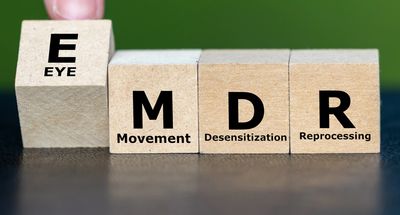
EMDR (Eye Movement Desensitisation and Reprocessing) is a structured therapy that can help you process experiences that continue to affect how you think, feel or respond today.
Sometimes you know that something happened in the past, but your body and emotions can still react as though it is happening now.
You may find yourself thinking:
EMDR can help you work through these experiences in a safe, structured and carefully paced way.
EMDR is a psychological therapy originally developed to help people who have experienced trauma and distressing experiences.
Rather than simply talking about an experience repeatedly, EMDR helps you process the memory and the emotions, thoughts and physical reactions connected to it.
During EMDR, you may be asked to briefly focus on a memory, thought, feeling or body sensation while following a form of bilateral stimulation, such as guided eye movements or tapping.
The aim is not to erase the memory.
The experience remains part of your history, but it can become less emotionally overwhelming.
You may still remember what happened without experiencing the same level of fear, anger, shame, sadness or distress.
EMDR may be helpful where past or distressing experiences continue to affect your life.
This can include:
EMDR is not automatically the right approach for everyone. An assessment is important to understand your circumstances and whether EMDR is appropriate for you.
One common concern is:
“Do I have to talk about everything that happened to me?” No.
EMDR is not about forcing you to tell your whole story or going into painful detail before you are ready.
We work at a pace that is appropriate for you.
Before any trauma processing begins, we spend time understanding what you
need, developing ways to manage difficult emotions and making sure you feel sufficiently prepared.
You remain involved in decisions about your therapy throughout the process.
Your first session is primarily about understanding you and assessing whether EMDR is appropriate.
We may talk about:
We may also begin identifying possible memories or situations that could become targets for future EMDR work.
You will not necessarily begin trauma processing in your first session.
For some people, preparation takes several sessions. That is completely normal.
Before working directly with distressing memories, we need to make sure you have ways of managing emotional distress.
This may include learning:
Grounding
Ways of bringing your attention back to the present moment.
Breathing and regulation
Techniques to help your body settle when you become anxious or overwhelmed.
Safe or calming imagery
Developing an internal place or image that can help you feel calmer.
Emotional awareness
Understanding what happens in your thoughts, emotions and body when you become triggered.
Resources and coping strategies
Identifying what helps you feel supported and able to manage difficult moments.
The aim is to make sure you have appropriate tools and support before processing begins.
When you are ready, we identify a particular experience, memory or present-day trigger to work with.
You may be asked to notice:
You will then be guided through sets of bilateral stimulation, such as eye movements or another agreed method.
You do not have to explain every detail of the memory.
Your mind may naturally move between different thoughts, memories, feelings or sensations.
I will guide the process and check in with you throughout.
EMDR can bring emotions, memories or physical sensations into awareness, which is why preparation and pacing are important.
However, you remain in control of the process.
You can tell me if something feels too much, if you need to pause, or if you need to take a break.
The aim is not to overwhelm you.
The aim is to help you process difficult experiences while remaining within a level of emotional safety that you can manage.
There is no fixed number of sessions.
Some people may benefit from a relatively focused course of EMDR, while others need longer-term therapy because they have experienced multiple or complex difficulties.
The length of therapy can depend on:
We review your progress together rather than rushing through the process.
EMDR can be offered online or in person, depending on your circumstances and suitability.
Online sessions are delivered through a secure video platform and may use guided eye movements, tapping or other forms of bilateral stimulation.
Before beginning EMDR online, we consider whether this format is appropriate for you and whether you have a suitable private and safe environment for sessions.
People can respond differently to EMDR.
You may notice that a memory feels less emotionally intense, that you have different thoughts about yourself, or that situations which previously triggered a strong reaction feel easier to manage.
Sometimes memories or emotions may continue to come to mind between sessions. This is why we discuss how you can look after yourself following processing and what to do if you become distressed.
The goal is not to forget what happened.
The goal is to help you remember without the past continuing to control how
you feel in the present.
You do not need to decide this before contacting me.
The first step is to talk about what you are experiencing and what you would like help with.
Together, we can consider whether EMDR is appropriate or whether another therapeutic approach, or a combination of approaches, would be more suitable.
Sometimes talking therapy and emotional regulation work are helpful before EMDR. For others, EMDR may become an important part of their therapeutic journey.
There is no pressure to start processing before you are ready.
At Mind4Therapy, EMDR is delivered as part of an integrative therapeutic approach.
This means we consider you as a whole person, rather than focusing only on one memory or symptom.
We can explore:
The therapy is collaborative, respectful and paced around your needs.
You do not have to face everything at once.
We start where you are and work together towards where you want to be.
If you are wondering whether EMDR could help you, you can arrange an initial conversation to discuss what you are experiencing and whether EMDR may be appropriate.
You don't need to have everything figured out before you reach out.
EMDR is an evidence‑based therapy that helps the brain process distressing memories, trauma, and emotional experiences that feel “stuck.” Instead of talking through every detail, EMDR uses structured bilateral stimulation — often gentle eye movements to help the mind and body release what has been overwhelming.
I am trained in EMDR as part of my integrative psychotherapy practice, and I use it safely and carefully alongside other approaches such as EFT, trauma‑informed counselling, and emotional regulation work. EMDR fits naturally into therapy when someone feels blocked, overwhelmed, or unable to shift patterns through talking alone.
EMDR is effective for a wide range of experiences, including:
Many clients choose EMDR when they notice reactions that feel “too big,” “too fast,” or “out of nowhere,” even when life is otherwise stable.
EMDR works both in person and online, using secure video platforms. Online EMDR is delivered safely with guided bilateral stimulation, tapping, or visual cues, and is just as effective for many clients.
EMDR is structured and paced carefully. A typical EMDR journey includes:
Length varies depending on the person and the experiences being processed. Some clients notice meaningful shifts within a few sessions; others benefit from a longer, steady approach.